
A practical guide to candidate CV anonymisation for recruitment agencies — how to remove personal data from resumes, meet GDPR requirements, and speed up blind screening at scale.
More clients are asking for it.
More compliance teams are requiring it. And more agencies are realising that manually removing personal data from a CV — name by name, field by field — is not a process that scales.
Candidate CV anonymisation has moved from a niche compliance requirement to a standard operational need for recruitment agencies, staffing firms, and executive search teams across the UK, Australia, South Africa, and beyond.
In this article, we'll explain what CV anonymisation actually involves, why it matters more than ever in 2026, and how agencies are implementing it as part of their standard formatting workflow — without adding hours of manual work.
What Is Candidate CV Anonymisation?
Candidate CV anonymisation is the process of removing or redacting personally identifiable information (PII) from a resume before it is shared with a client or passed through a screening process.
This typically includes:
- full name
- photo
- email address and phone number
- home address
- date of birth
- nationality or visa status
- LinkedIn URL or other personal links
- any other details that could identify or introduce bias toward a candidate
The goal is to ensure that hiring decisions — or at minimum, initial screening decisions — are made on the basis of skills, experience, and qualifications rather than personal characteristics.
Why Agencies Are Being Asked to Anonymise CVs
There are two drivers pushing candidate CV anonymisation up the agenda: compliance and client demand.
Compliance: GDPR and Data Protection
Under GDPR — which applies across the UK and EU, and influences data handling standards in Australia and South Africa — personal data must be collected, stored, and shared with a clear lawful basis.
When a recruiter shares a candidate's full contact details, photo, or date of birth with a client who has no legitimate need for that information at the screening stage, it creates unnecessary data exposure — and potential liability.
Anonymising CVs at the point of submission reduces the candidate's data footprint, limits exposure, and supports compliance with data minimisation principles under GDPR.
CVFormatter is GDPR compliant. Candidate data processed through the platform is handled in accordance with applicable data protection regulations, giving agencies and their clients confidence that their workflows meet modern privacy standards.
Client Demand: Blind Screening and Fair Hiring
Beyond compliance, many clients — particularly larger enterprise organisations, public sector bodies, and financial services firms — now actively request anonymised CVs as part of their internal hiring policy.
Blind screening is increasingly seen as a practical tool for reducing unconscious bias. Removing a candidate's name, photo, and other identifiers means the first assessment is based entirely on what they've done — not who they are or what they look like.
For recruitment agencies, being able to deliver anonymised resumes reliably and consistently is becoming a competitive expectation, not a differentiator.
The Problem With Manual Anonymisation
Most agencies that anonymise CVs today do it manually.
A recruiter opens the document, selects the candidate's name, deletes it. Removes the photo. Hunts for the email address in the header. Checks the footer. Scans for any mentions of the candidate's name in the body text. Saves a new version. Renames the file.
For one CV, this takes 5–10 minutes. Across a shortlist of six candidates, that's close to an hour — before the formatting has even been touched.
The other risk is inconsistency. Manual redaction is error-prone. A candidate's name buried in a sentence, or a LinkedIn URL tucked in the footer, is easy to miss. When that information reaches a client who specifically requested blind submissions, it undermines both the process and the agency's credibility.

How CVFormatter Handles Candidate CV Anonymisation
CVFormatter includes built-in anonymisation as a core feature — not an add-on.
When a recruiter uploads a candidate's resume, they can enable anonymisation as part of the formatting workflow. CVFormatter automatically identifies and redacts the configured personal data fields before generating the output.
The result is a fully branded, client-ready CV — with all personal identifiers removed — delivered in seconds.
Book a free demo here.
What Gets Redacted
Agencies can configure which fields are redacted based on their clients' requirements. Standard anonymisation typically covers:
- candidate name
- photo
- email address
- phone number
- physical address
- date of birth
- nationality and visa details
- LinkedIn and personal URLs
This is applied consistently across every CV processed — no missed fields, no manual checks.
Formatting and Branding Are Preserved
One of the biggest pain points with manual anonymisation is that removing content often breaks the document layout.
With CVFormatter, anonymisation happens within the formatting pipeline. The output document maintains your agency's branded template — correct fonts, spacing, section structure, and layout — regardless of what has been removed. There's no reformatting required after the redaction step.

Consistent Across Your Whole Team
Because anonymisation is handled by the system rather than by individual recruiters, the output is consistent regardless of who processes the CV.
Every recruiter on your team — whether they're processing two CVs or twenty — applies the same redaction standard. No gaps. No forgotten fields. No version where one recruiter missed the photo and another didn't.
Anonymisation for Different Submission Types
Not every client requires the same level of anonymisation, and agencies often need to handle different requirements in parallel.
CVFormatter supports this flexibility. Recruiters can choose to apply full anonymisation, partial anonymisation (e.g., removing name and photo only), or no anonymisation — depending on the submission. The same candidate's resume can be formatted and exported in both anonymised and non-anonymised versions from the same upload, without duplicating work.
This matters for agencies managing multiple client accounts with different preferences — particularly RPO teams and staffing firms operating across several industry verticals at once.
What This Means for Candidate Trust
Anonymisation isn't just a client or compliance requirement. It also reflects how agencies handle candidate data.
When a candidate submits their resume to an agency, they're trusting that their personal information will be used appropriately. Limiting how and when that data is shared — by anonymising CVs before they reach clients who don't yet need that information — is a concrete expression of that responsibility.
As data privacy awareness grows among candidates, agencies that can demonstrate disciplined data handling build stronger trust at the point of registration.

Anonymisation as Part of a Wider Compliance Posture
For most agencies, CV anonymisation doesn't sit in isolation. It's one part of a broader approach to data protection that includes how candidate data is stored, how long it's retained, and who has access to it.
CVFormatter supports this posture by keeping candidate data handling contained within a purpose-built platform, rather than distributed across personal desktops, email threads, and shared drives. Centralised resume storage, usage reporting, and team-level access controls give agencies better visibility over their data workflows — and better answers when clients or auditors ask questions.
For agencies in the UK operating under UK GDPR, or firms in Australia navigating the Privacy Act, having a processing platform that's built with compliance in mind removes one more variable from an already complex compliance picture.
Final Thoughts
Candidate CV anonymisation is no longer a specialist request from a handful of progressive clients.
It's becoming a standard part of what recruitment agencies are expected to deliver — driven by GDPR, fair hiring policies, and the growing sophistication of enterprise procurement processes.
The agencies that treat anonymisation as a system — automated, consistent, and built into the formatting workflow — handle it without adding admin burden. Those that treat it as a manual task will continue to absorb the time cost and carry the risk of inconsistent execution.
CVFormatter makes anonymisation a one-click step in the same workflow your team already uses to format and brand CVs. GDPR compliant, configurable, and consistent across your whole team.
Book a free demo to see how CVFormatter handles candidate CV anonymisation — and how it fits into your agency's submission workflow from day one.
Suggested Images
Image 1 — Featured / Hero
- Placement: Front matter
imageUrl - Alt text: Candidate CV anonymisation process showing personal data redacted from a resume for recruitment agencies
- Image generation prompt (Nano Banana 2): Photorealistic flat lay of a printed A4 document on a clean white desk. Several lines of text on the document are covered by solid black redaction bars — name, contact details, address visible as blacked-out blocks. A pen rests beside the document. Minimal, clinical, professional atmosphere. Neutral tones — white, light grey, charcoal. No faces. No readable text.
Image 2 — Manual process problem
- Placement: After "The Problem With Manual Anonymisation" section
- Alt text: Manual candidate CV anonymisation process showing time cost and error risk for recruitment teams
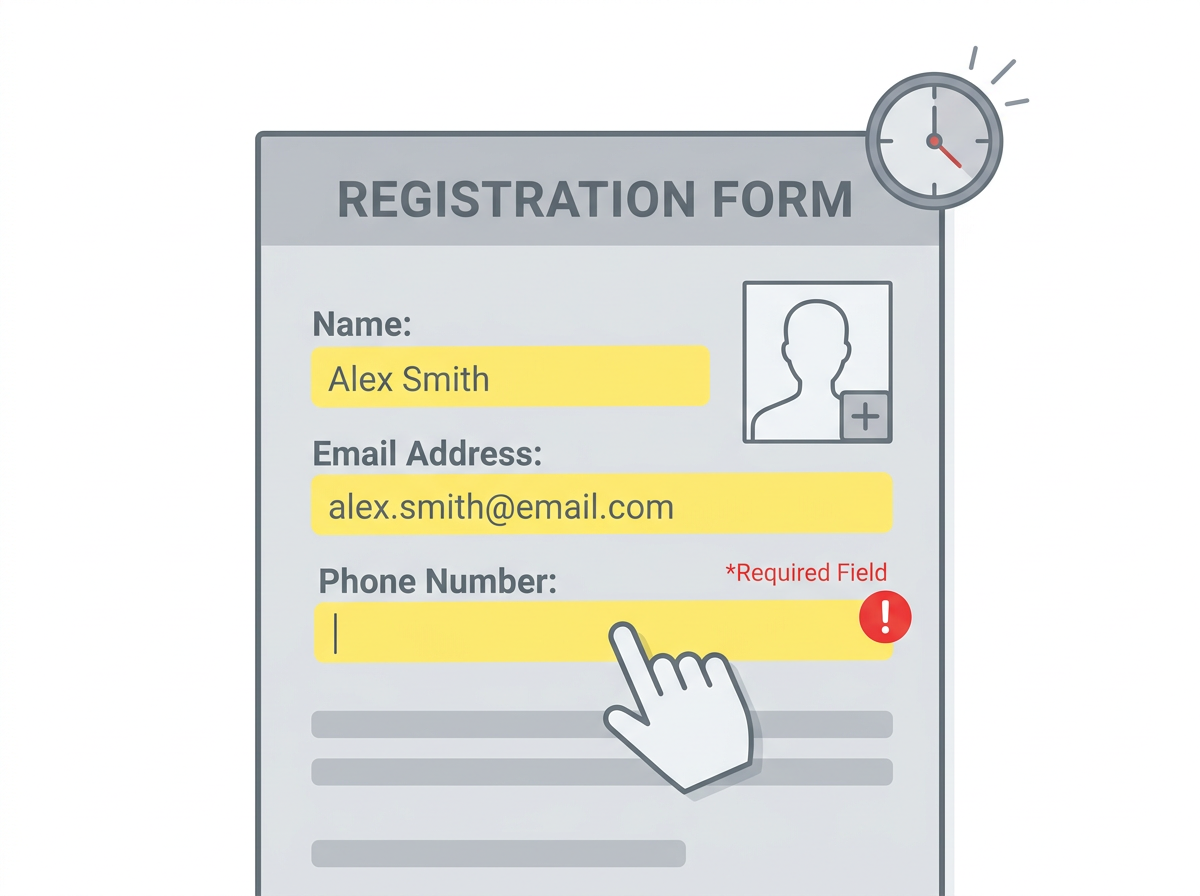
- Image generation prompt (Nano Banana 2): Flat-style illustration of a document with several highlighted fields in yellow — name, email, phone, photo placeholder — with a hand cursor hovering uncertainly over one field, and a red warning icon indicating a missed field. Clock icon in the corner suggesting time pressure. White background. Muted palette — yellow highlight, red warning, grey document. Clean vector style. No faces.
Image 3 — Automated anonymisation output
- Placement: After "How CVFormatter Handles Candidate CV Anonymisation" section
- Alt text: CVFormatter automated candidate CV anonymisation producing branded redacted resume for recruitment agencies
- Image generation prompt (Nano Banana 2): Flat-style illustration of an A4 document with a clean agency-branded header — logo placeholder, navy and teal colour accents — and several fields replaced by neat grey placeholder bars where personal data has been removed. A green checkmark badge in the corner. White background. Professional, modern, clean. No faces. No readable text on document.
Image 4 — Candidate trust / data privacy
- Placement: After "What This Means for Candidate Trust" section
- Alt text: Candidate data privacy and trust built through anonymised CV submissions in recruitment agency workflows
- Image generation prompt (Nano Banana 2): Flat-style illustration of a shield icon at centre, surrounded by small document icons with padlock symbols and small person silhouettes (no faces, abstract). Lines connecting the documents to the shield suggest data flowing into a protected system. Colour palette — navy, teal, white, soft grey. Clean and minimal. White background. No text needed.
Image 5 — Compliance / GDPR posture
- Placement: After "Anonymisation as Part of a Wider Compliance Posture" section
- Alt text: GDPR compliant CV anonymisation workflow for recruitment agencies with centralised data controls
- Image generation prompt (Nano Banana 2): Flat-style illustration of a simple compliance checklist document with three rows, each with a teal checkmark — representing data handling steps in a workflow. A small padlock icon at the top of the document. Clean white background. Muted tones — teal, navy, light grey. No faces. Minimal vector aesthetic.